


Dental implant treatment is created to replace missing teeth and bring back the strength and function of your smile. They are one of the most reliable solutions in implant dentistry, but like any dental restoration, issues can sometimes develop. One of the most common problems patients face is a loose dental implant crown. Identifying the symptoms early and getting prompt care can help avoid further complications and support your overall oral health.
This guide explains the main symptoms of loose dental implant crown, why they occur, and what steps to take if your dental implant feels loose.
Understanding the Dental Implant Crown
A dental implant is made up of several parts. The implant post (or fixture) is placed into the jawbone, acting as the root. Above it sits an abutment, which connects the implant crown, the visible artificial tooth. The crown is what you chew with and see when you smile.
Sometimes, the problem doesn’t lie with the actual implant itself but with the crown or abutment attached to it. This is why it’s important to distinguish between a loose crown and a loose implant. A dentist can determine which part has been affected during a dental evaluation.
Common Symptoms of a Loose Dental Implant Crown
Understanding the signs of a loose dental implant crown allows you to act quickly and prevent further damage or possible implant failure. Here are the most common symptoms to look out for.
 Noticeable Movement
One of the earliest symptoms of a loose dental implant crown is movement in the implant site when you bite or touch the crown. Unlike natural teeth, which have slight flexibility, implants should not move at all. Any movement could indicate a loose abutment, screw loosening, or damage to the implant structure.- Changes in Bite or Chewing
If your bite feels uneven or you notice discomfort when chewing, it may indicate that your implant crown has become loose. This may happen if the existing crown has shifted, causing pressure on the adjacent teeth or surrounding bone. - Clicking or Popping Sounds
A loose implant crown can sometimes make clicking sounds when you chew or talk. This often points to minor movement between the crown and the implant post, a situation that needs timely intervention to prevent further complications. - Pain or Gum Irritation
Healthy dental implants should not cause pain. If you notice tenderness, swelling, or gum irritation around the implant area, it might be a sign that the crown or abutment has become loose. Persistent pain could also mean infection or inflammation in the surrounding gums. - Redness or Bleeding
Red or swollen gum tissue around the implant crown can indicate irritation caused by movement or poor oral hygiene. If ignored, this issue may progress into gum disease and possible bone loss around the implant. - A Metallic or “Loose” Sensation
If your dental implant feels loose, you might notice a strange metallic sensation or slight vibration while eating. This could suggest a problem with the cement retained crown, screw retained crown, or even the entire implant connection. - Food Trapping Near the Implant
When a loose implant crown moves slightly, it can create small gaps where food particles get trapped. This can irritate the surrounding gums, increase bacterial build-up, and affect oral health if not cleaned properly.
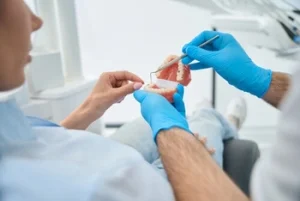 Noticeable Movement
What Causes a Dental Implant Crown to Loosen?
There are several possible reasons your implant crown may become loose.
- Screw loosening: One of the most common causes. The tiny screw holding the crown to the abutment can loosen over time from chewing or grinding teeth.
- Loose abutment: The connector between the implant and crown may shift or unscrew slightly.
- Wear and tear: Constant biting pressure or hard or sticky foods can strain the implant structure and loosen the connection.
- Teeth grinding (bruxism): Repeated excessive force from grinding teeth at night can weaken both the implant crown and the surrounding bone.
- Gum disease or infection: Inflammation or infection of the gum tissue can cause swelling and destabilise the implant fixture.
- Bone loss: If the jawbone around the implant starts to weaken, it can make the actual implant less stable.
- Cement or attachment issues: In cement-retained crowns, the bonding material can break down; in screw-retained crowns, the screw can come loose.
Why Early Treatment Matters
Even minor movement in a loose dental implant crown shouldn’t be ignored. The more time it remains untreated, the greater the chance of further complications such as:
- Implant failure: If the implant post or implant fixture becomes unstable due to ongoing movement or infection.
- Damage to surrounding teeth: A shifting crown can press against adjacent teeth or affect your bite alignment.
- Bone loss or gum recession: Caused by continuous irritation or poor oral hygiene around the implant area.
- Infection: Food particles and bacteria can build up around the implant site, which may cause inflammation or infection.
Early treatment by a dentist can often prevent the need for more complex procedures such as bone grafting or a new implant. Regular monitoring also ensures the implant remains healthy and stable.
What to Do if Your Dental Implant Feels Loose
If you experience any symptoms of a loose dental implant crown, here’s what to do.
- Avoid using the implant for chewing.
Don’t apply excessive force or eat hard or sticky foods until you’ve seen your dentist. - Maintain good oral hygiene.
Brush gently around the implant area and rinse with warm salt water to keep the surrounding gums clean. - Avoid home repairs.
Do not attempt to tighten or reattach the crown yourself. Doing so can result in additional damage to the implant structure or the prosthetic tooth. - Schedule a dental appointment immediately.
Contact your dentist for a dental evaluation. If you notice pain, bleeding, or sudden movement, seek an emergency appointment. A dentist will determine whether the loose implant crown is due to a loose abutment, screw loosening, or an issue with the implant fixture itself.
How Dentists Treat a Loose Implant Crown
Treatment varies depending on the cause and the condition of both the implant crown and the surrounding bone. Common options include:
- Tightening or replacing the screw: If screw loosening is the issue, your dentist may simply tighten or replace the small screw.
- Re-cementing the crown: For cement-retained crowns, the dentist can remove, clean, and reattach the crown securely.
- Adjusting bite alignment: If pressure from adjacent teeth or grinding teeth is contributing, the bite can be adjusted.
- Treating gum disease: If the surrounding gums show signs of infection, the dentist will treat inflammation to stabilise the implant area.
- Bone grafting or new implant: In severe cases of bone loss or implant failure, the dentist may perform bone grafting or replace the entire implant.
Final Thoughts
Dental implants offer a reliable, long-term way to replace missing teeth and restore the strength and function of your smile. But like natural teeth, they need attention and care. Recognising the symptoms of a loose dental implant crown and acting quickly helps protect your dental health and the longevity of your implant dentistry investment.
If your implant feels loose or you notice any of these symptoms, book a dental appointment with your dentist as soon as possible. They can carry out a dental evaluation to stabilise your crown and maintain your oral health.
If you’re concerned about symptoms of a loose dental implant crown or want to make sure your implant stays secure and healthy, book a consultation with us at Total Care Dental Studio or call (07) 3186 8517.
Note: Any surgical or invasive procedure carries risks. Before proceeding, you should seek a second opinion from an appropriately qualified health practitioner.
Resources
Watson, S. (2024). ‘Gingivitis and Periodontal Disease (Gum Disease)’. WebMD, 9 February. New York, NY: WebMD LLC. https://www.webmd.com/oral-health/gingivitis-periodontal-disease
Mayo Clinic Staff. (2024). ‘Teeth Grinding (Bruxism)’. Mayo Clinic, 27 December. Rochester, MN: Mayo Foundation for Medical Education and Research. https://www.mayoclinic.org/diseases-conditions/bruxism/symptoms-causes/syc-20356095
Cleveland Clinic Staff. (2024). ‘Dental Bone Graft’. Cleveland Clinic, 6 August. Cleveland, OH: Cleveland Clinic Foundation. https://my.clevelandclinic.org/health/treatments/21727-dental-bone-graft



Crack tooth repair is a dental procedure used to fix a cracked tooth. There are different types of cracks that Read more

Dental implants have revolutionised tooth replacement options, offering a durable and natural-looking replacement for missing teeth. But what exactly does Read more